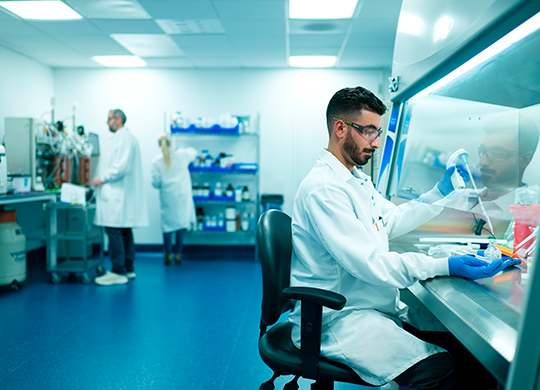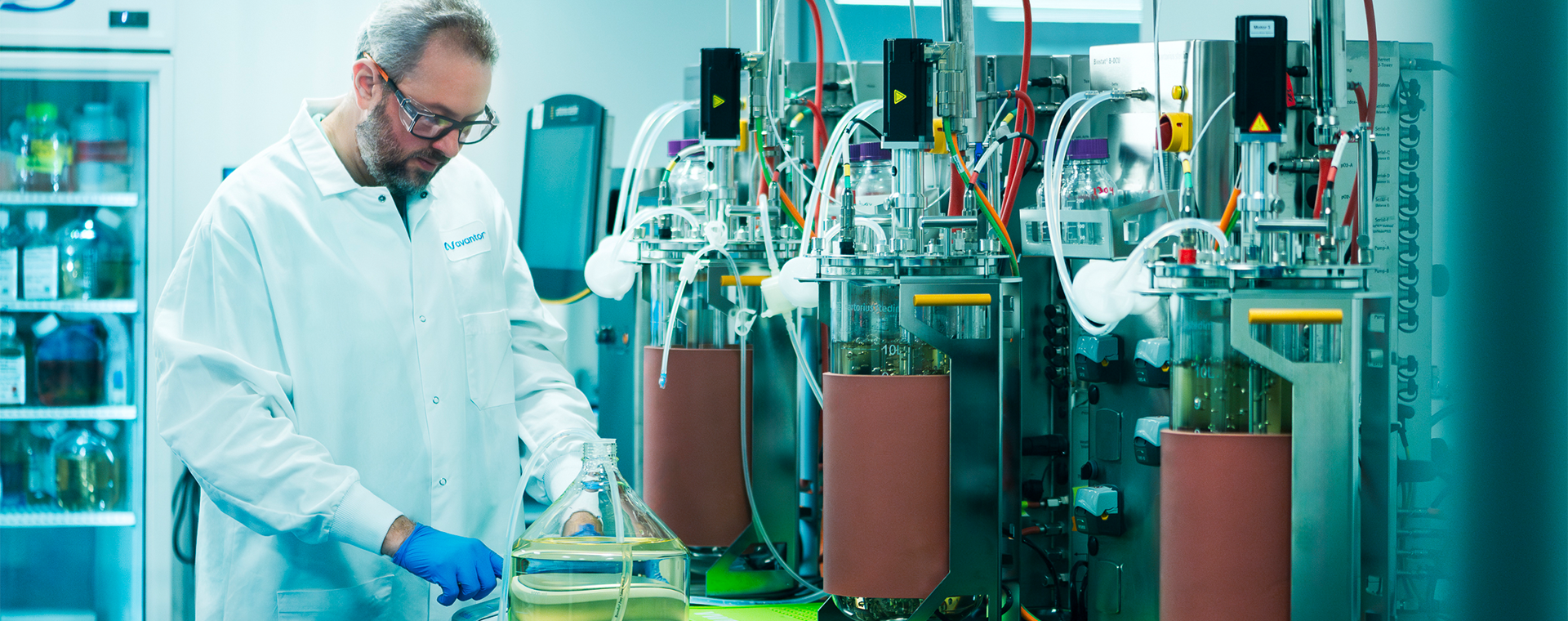
Fermentation And Cell Culture Lab
Learn how our fermentation lab is developing new recombinant ligands for chromatography resins, while the cell culture lab is innovating and optimizing novel bioprocessing solutions for cell line development as well as reagents, supplements, pump systems and more.
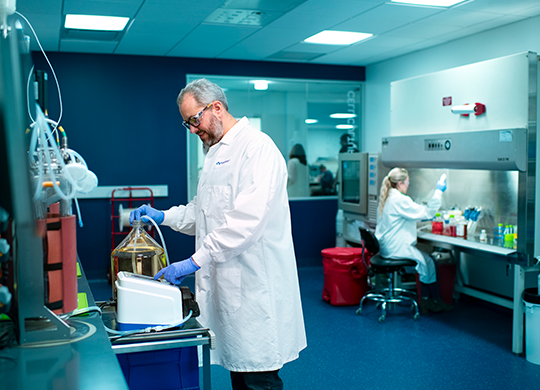
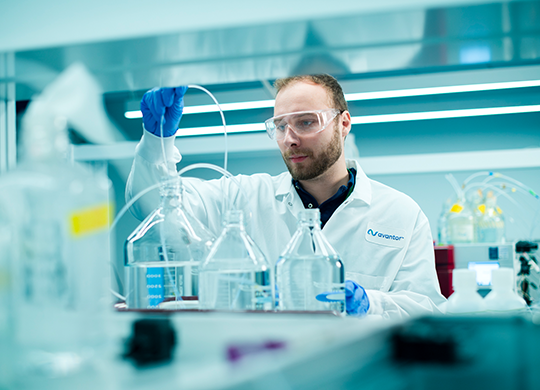
In the fermentation lab, scientists and bioprocessing specialists focus on recombinant ligand design to improve purification processes for mAbs, bispecific antibodies, and vector production.
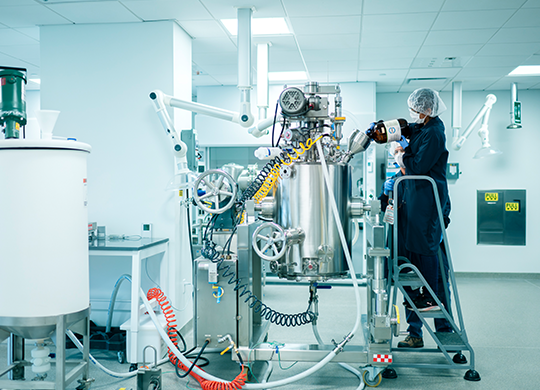
The cell culture lab focuses on advanced cell line development for biotherapeutic production, as well as creating new reagents, supplements, and pump systems to optimize upstream workflows.
Lab capabilities
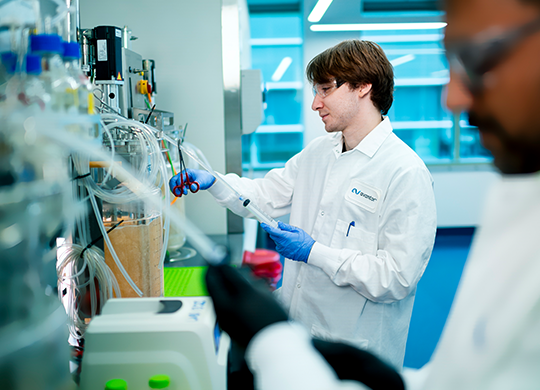
Ligand engineering for enhanced antibody purification
Optimizing ligand design will improve the structural stability of chromatography resins, their binding capacity, and resilience under varying conditions.
New chromatography resins will help to overcome downstream purification challenges and deliver higher yields and greater purity, helping to reduce production costs and improve scalability.
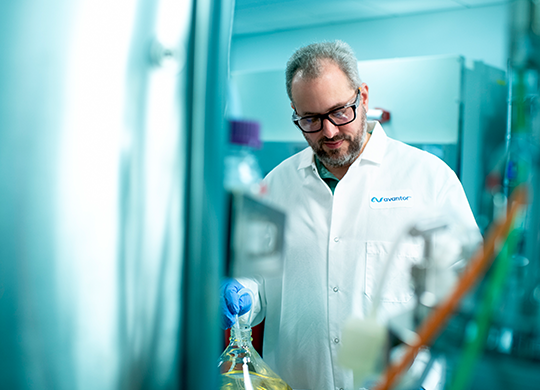
Cell line development and bioprocess optimization
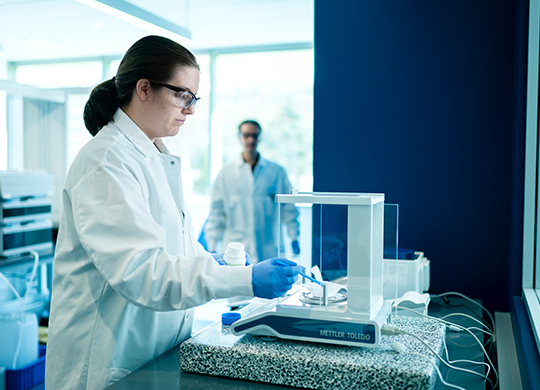
The cell culture lab optimizes bioprocesses for producing monoclonal antibodies (mAbs), fusion proteins, bispecifics, and other novel antibody formats. The lab also develops novel reagents and supplements to enhance protein expression and engineer new fluid transfer solutions.
New products are designed to optimize culture conditions, increase protein expression levels, and accelerate development of complex biologics, reducing time-to-market for new therapies.
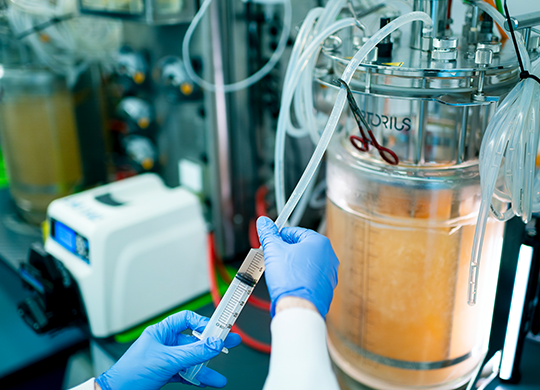
Development of novel transfection agents and plasmid production
The cell culture lab develops innovative transfection agents to enhance plasmid delivery and boost AAV vector production efficiency.
Enhanced plasmid delivery solutions help to streamline gene therapy workflows, resulting in higher AAV titers and more efficient production processes.
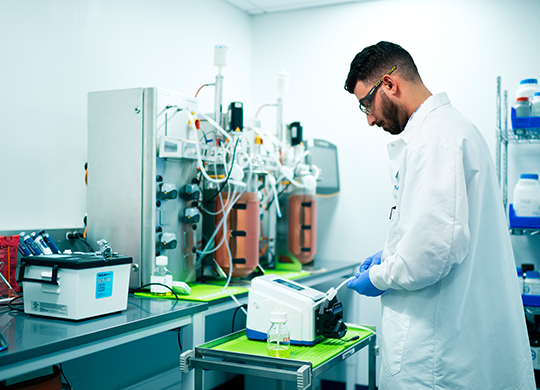
Improve fluid transfer for upstream bioprocesses
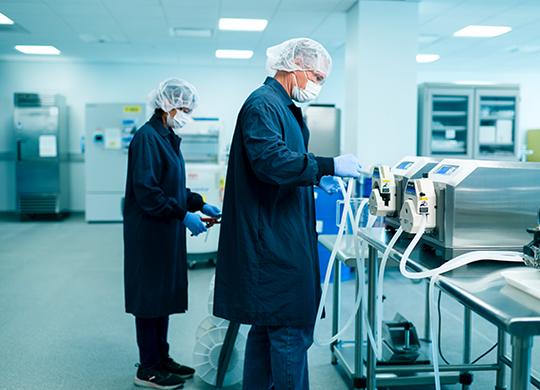
Minimizing shear stress while enabling efficient fluid handling is essential for maintaining cell viability during upstream processing. The design of the Masterflex® Cytoflow peristaltic pump offers significant advantages, with the mootor speed, tubing occlusion, and roller geometry directly influencing shear forces.
Adjustable occlusion settings allow fine-tuning to reduce cell damage while larger tubing diameters help minimize shear stress. The advanced pump design provides further protection of cells while optimizing fluid flow.